Sunil Gavaskar declares Virat Kohli the GOAT of ODIs: “Sachin Tendulkar has been right up there but when you pass him…”
Virat Kohli’s place in the cricketing conversation has always been huge — and after the Ranchi masterclass on November 30, 2025, that conversation gained a fresh, decisive chapter. Former India captain Sunil Gavaskar, speaking on the mid-innings show soon after Kohli’s century, said outright that Kohli is the greatest in One-Day Internationals. Gavaskar’s endorsement didn’t downplay Sachin Tendulkar’s standing; it simply marked a new reality: when you pass Sachin’s benchmarks, you step into a different stratum.
Why Gavaskar’s words matter — and what he actually said
Veteran perspective gives weight to the “GOAT” tag
When a legend like Sunil Gavaskar — a player who defined an era — calls someone the best in a format, the comment carries context as well as emotion. Gavaskar pointed to three pillars: peer respect, sheer volume of runs, and the rarity of scoring 52 hundreds in one format. He also referenced praise from outside India, noting that Ricky Ponting has called Kohli the best 50-over player he’s seen — an added layer that, for Gavaskar, removes much of the usual national bias from the debate.
Gavaskar’s line — “Sachin has been absolutely right up there with 51 hundreds. But when you pass the great Sachin Tendulkar, then you know where you stand” — succinctly captures why many view Kohli’s landmark as more than a number. It’s a moment of historical re-ranking.
The innings that triggered the claim
Ranchi, November 30, 2025 — Kohli’s 52nd ODI century
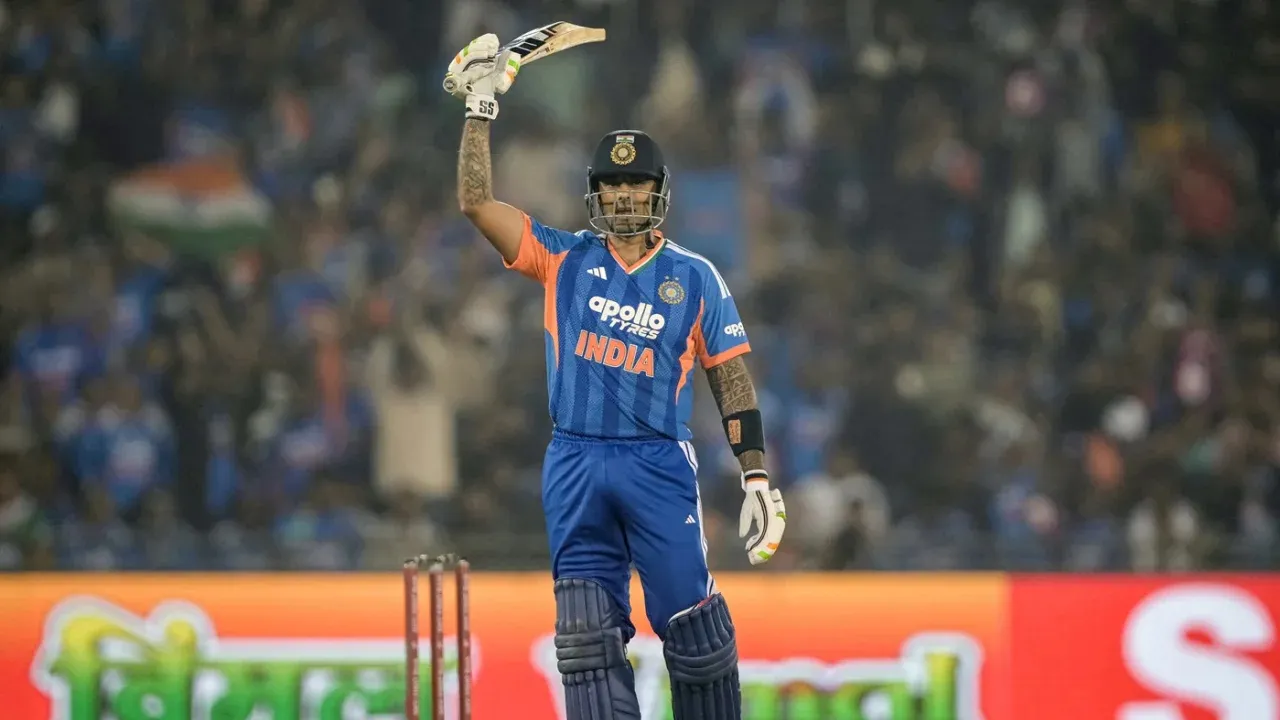
The trigger was Kohli’s unbeaten 135 (reported widely as 135 off 120 balls) in the first ODI against South Africa at JSCA International Stadium, Ranchi. That knock made him the first man in men’s international cricket to register 52 centuries in a single format — a milestone that formally put him ahead of Sachin Tendulkar’s long-standing mark in international cricket for a single-format century tally. Scorecards and match reports confirm the milestone.
Beyond the headline number, the innings itself had the hallmarks of Kohli’s classical approach: measured acceleration, control under pressure, and an ability to time medium-pace bowling for both boundary and quick singles. The response in the stadium and the dressing room — from teammates and fans — underlined the moment’s emotional heft. A fan even breached security to approach Kohli after the century, showing just how personal and immediate such records feel to supporters.
Why 52 centuries changes the debate (and why numbers aren’t the whole story)
Records sharpen arguments — but context completes them
Numbers matter in cricket. Centuries are simple, comparable achievements, and 52 in a single format is unprecedented. But being the “GOAT” is rarely a single-statistic call. Gavaskar’s argument folded in qualitative signals: peer respect (what opponents and fellow greats say), adaptability across conditions, and consistency over time.
Virat Kohli’s case is strengthened by:
- Exceptional conversion and consistency in chases and run-chases.
- A career average in ODIs that remains among the elite.
- High-pressure match performances (World Cups, Champions events, bilateral crunch games).
Those elements, along with the raw century count, are what Gavaskar and others point to when using the GOAT label. Still, there will always be a subjective element — Tendulkar’s iconic status, Viv Richards’ dominance in his era, and Don Bradman’s statistical supremacy in Tests remain parts of the broader “greatest ever” conversation.
What experts aside from Gavaskar are saying
Global voices and the Ponting factor
Gavaskar cited Ricky Ponting’s assessment that Kohli is the best 50-over player he’s seen. Ponting has publicly praised Kohli’s ODI credentials before, noting his shot-making, hunger for runs, and ability to break records while performing under pressure. That external validation — from a former Australian captain and world-class batter — removes some of the “national bias” objections that often muddy GOAT arguments.
Cricket analysts also point to Kohli’s longevity and adaptability: thriving in an era with T20s, franchise leagues, and evolving pitches makes sustained ODI excellence harder than it was in previous decades. For many analysts, that era shift increases the weight of Kohli’s achievements.
What this means for Virat Kohli’s legacy
From great to singular — how records reshape perception
Kohli’s 52nd century is both a statistical and symbolic milestone. Statistically, he now occupies the top slot in single-format centuries. Symbolically, endorsements from peers and legends fast-track public and historical perception.
For cricket historians and fans, Kohli’s legacy will increasingly be measured not just in runs and hundreds but in the narratives those numbers enable: the modern chaser who redefined run-management, the leader who anchored a dominant batting unit, and the player whose benchmarks future generations will chase.
Still, sport history loves nuance. Tendulkar’s cultural and emotional imprint, Viv Richards’ match-winning aura, and the different contexts of earlier eras mean the GOAT debate will continue in forums, pubs, and opinion pages. Yet moments like Ranchi make it harder to sustain purely sentimental objections to Kohli’s numerical supremacy.
Bottom line: why the debate feels different now
Virat Kohli, records, and a shifting cricket landscape
Sunil Gavaskar’s declaration matters because it synthesizes numbers, peer respect, and historical perspective into a short, forceful verdict: Virat Kohli has done enough in ODIs to be called the greatest by those who played the game and watched closely. That doesn’t erase other legends — it places Kohli at the highest point in one specific, concrete measure of ODI greatness.
For fans and analysts, the debate will continue to be fun and fractious. But after Ranchi, with 52 centuries and endorsements from cricketing greats, the headline is clear: when it comes to ODIs, the conversation now — for many experts — ends with Virat Kohli.