How a call from India convinced Sheikh Hasina to leave Bangladesh — and may have saved her life
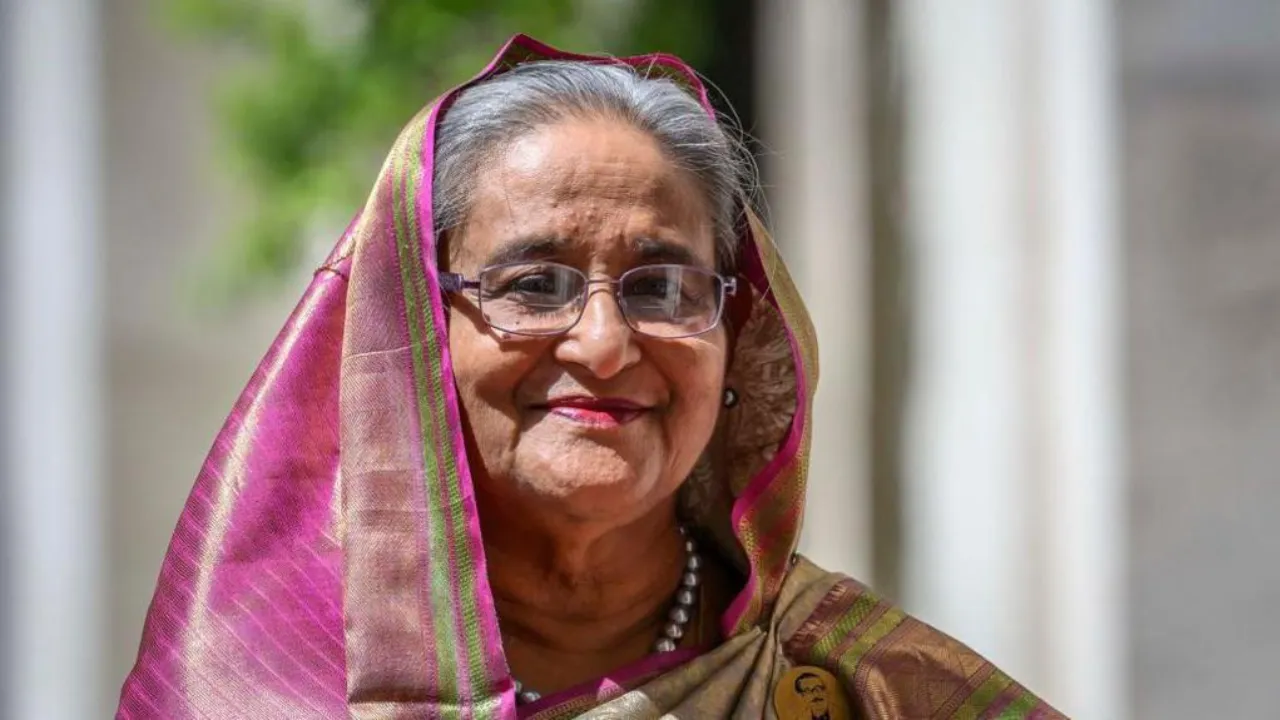
On August 5–6, 2024, a dramatic chain of events upended Bangladeshi politics. Mass protests, a collapsing security response and frantic conversations inside the corridors of power ended with Prime Minister Sheikh Hasina resigning and flying to India. Multiple media accounts and interviews with her family later revealed that urgent phone calls — including one to her son abroad — helped convince her to step down and leave the country. That decision, and India’s willingness to provide shelter, likely prevented further bloodshed and may well have preserved her life.
Below I explain what happened, why the phone calls mattered, how India’s role fits into Hasina’s personal history, and what this moment means for Bangladesh — with facts verified from contemporary reporting.
The tipping point: protests, police, and a government under siege
In early August 2024, protests that began over quota reforms escalated into a nationwide movement demanding Sheikh Hasina’s resignation. Clashes turned deadly, with reports of scores killed in violent confrontations between protesters and security forces. As large crowds marched on the capital and the prime minister’s residence, senior police and military leaders warned that the situation could not be contained by force alone.
According to investigative reporting in Dhaka newspapers and international outlets, there was a security meeting in the morning where top officials told Hasina the police and security services were running out of options. At one point, those officials concluded even the state’s force instruments might not be enough to stop a surging, determined crowd. That loss of confidence inside the security apparatus was the immediate, strategic reason why the leadership pressed Hasina to consider stepping down for her safety.
The crucial phone call: family intervention that changed everything
Multiple reports and interviews with Hasina’s son, Sajeeb Wazed Joy, make clear she did not want to leave at first. She reportedly preferred to stay and let security forces try to contain the unrest. But family members and security chiefs were worried about the scale of the threat. In those final hours, authorities contacted Hasina’s son abroad; Sajeeb placed urgent calls to persuade his mother that remaining was too dangerous. He later told reporters the decision to go was made under extreme pressure and that the family convinced her to accept temporary refuge elsewhere.
News outlets reported that the army and top police gave Hasina a narrow window — as short as 45 minutes by some accounts — to resign and leave the country if she wanted to be evacuated safely. With the crowd advancing and official warnings growing sharper, the call from her son and conversations with close relatives appear to have been decisive in overriding her initial refusal to leave.
Why a phone call mattered more than rhetoric or orders
A prime minister’s decision under imminent threat is rarely made purely on policy grounds. Three practical reasons explain why that phone call mattered:
- Emotional authority. Family members often hold more sway than ministers in moments of personal danger. A son’s plea — backed by the sober assessment of security chiefs — can pierce political resolve.
- Speed. When crowds are moving in and formal chains of command are fraying, a direct phone line can speed decisions that otherwise would become trapped in bureaucracy. Reports indicate there was literally no time for drawn-out debates.
- Credible escape plan. The calls didn’t ask her simply to give up — they came with an evacuation route and the immediate offer of safe passage to India, a country that historically had sheltered her family in past crises. That made leaving an actionable, not merely symbolic, choice.
India’s role: shelter in 1975 and again in 2024
India’s involvement in Hasina’s safety has historical depth. After the 1975 assassination of her father, Sheikh Mujibur Rahman, India’s then-prime minister Indira Gandhi offered shelter to Hasina and her sister — and New Delhi provided them with security while the sisters sought to assess the fate of surviving family members. That earlier episode established a precedent and relationship that resurfaced nearly 50 years later.
In August 2024, once Sheikh Hasina accepted the need to leave, she flew to India and was reported to be under protection there. Her son and Indian officials later confirmed she had not applied for asylum in a third country and that New Delhi had protected her for humanitarian and security reasons. For a leader whose life had been threatened repeatedly — and whose family had been brutally targeted in 1975 — India’s swift offer of refuge was both practical and symbolic.
Did leaving “save her life”? Context and caution
Saying the evacuation “saved her life” is a reasonable but careful conclusion. Given the collapse of local security assurances, the surge of protestors, and the military and police reluctance to use force to suppress the crowds, staying in Dhaka would have exposed Sheikh Hasina to far greater physical danger than leaving. Multiple contemporaneous reports indicated that violence had already cost dozens of lives; in that context, a quick evacuation to a friendly neighbouring country was a clear life-preserving move.
At the same time, it’s important to avoid dramatic certainties: we can’t prove what would have happened had she stayed. What we can verify from reporting is this: security leaders feared the situation might spiral, family members urged evacuation, and India provided a safe, immediate option — together these factors made the flight the most plausible way to avoid immediate harm.
What this episode means for Bangladesh and for Sheikh Hasina
For Bangladesh, the episode signalled a dramatic collapse in the authority of a long-standing government and raised questions about civil-military relations, accountability for protest deaths, and the durability of democratic institutions.
For Sheikh Hasina, the episode underscored both vulnerability and survival. Her family history — the 1975 massacre, long-running threats, assassination attempts against her personally, and decades of hard politics — frames this evacuation as another chapter in an unusually fraught political life. Whether she returns to active politics, seeks to rebuild legitimacy, or retreats from frontline leadership will depend on domestic developments and legal and political processes in the months that follow.
Final takeaway: a private call with public consequences
The story of how Sheikh Hasina left Bangladesh in August 2024 is not about a single dramatic gesture but about the convergence of several pressures: mass mobilization on the streets, fraying institutional loyalty, urgent family intervention, and a practical escape route offered by a neighbouring power.
A phone call — pragmatic, emotional and fast — helped tip the balance. Backed by a credible evacuation plan (and historical ties to India), that call turned a possible catastrophe into a controlled exit. For a leader with a history marked by threats to life, that controlled exit quite plausibly saved her life — and it left Bangladesh to confront the political consequences.