Ex-Pak PM’s Daughter Maryam Trolled for “Dressing Up Like Bride” at Her Son’s Second Wedding
The recent wedding of Maryam Nawaz’s son has sparked an unexpected online storm in Pakistan and beyond. While weddings usually focus on celebration and unity, this particular event turned into a heated social media debate — not for politics, but for fashion choices and cultural expectations. Before we dive in, it’s important to note this event is directly tied to former Pakistan Prime Minister Nawaz Sharif’s family and has drawn immense public attention.
Let’s explore what happened, why it became a trending topic, and the broader public reaction.
Who Is Maryam Nawaz? A Brief Context
Maryam Nawaz Sharif is a well-known political leader in Pakistan. She is the daughter of Nawaz Sharif, the three-time former Prime Minister of Pakistan, and currently serves as the Chief Minister of Punjab, one of Pakistan’s most politically significant provinces.
Her rise in politics is often associated with her family’s long influence in Pakistani governance, and she remains a polarising figure. Her role in politics ensures that almost every appearance she makes — personal or public — attracts heightened attention.
The Event: Junaid Safdar’s Second Marriage
A High-Profile Wedding in Lahore
Maryam’s son, Junaid Safdar, recently married Shanzay Ali Rohail in a lavish ceremony in Lahore, Pakistan. The celebrations included traditional pre-wedding rituals like the mehendi and the main wedding ceremony, attended by political families, influencers, and media personalities.
This was Junaid’s second marriage; his first wedding to Ayesha Saif in 2021 ended in divorce two years later.
What Sparked the Online Outrage?
Instead of focusing on the couple, many people online shifted their attention to what Maryam Nawaz wore. Pictures and videos of her elaborate outfits circulated quickly on Pakistani social platforms and drew strong reactions.
The Controversy: “Why Is She Dressed Like the Bride?”
Maryam’s Outfits Caught Eyes First
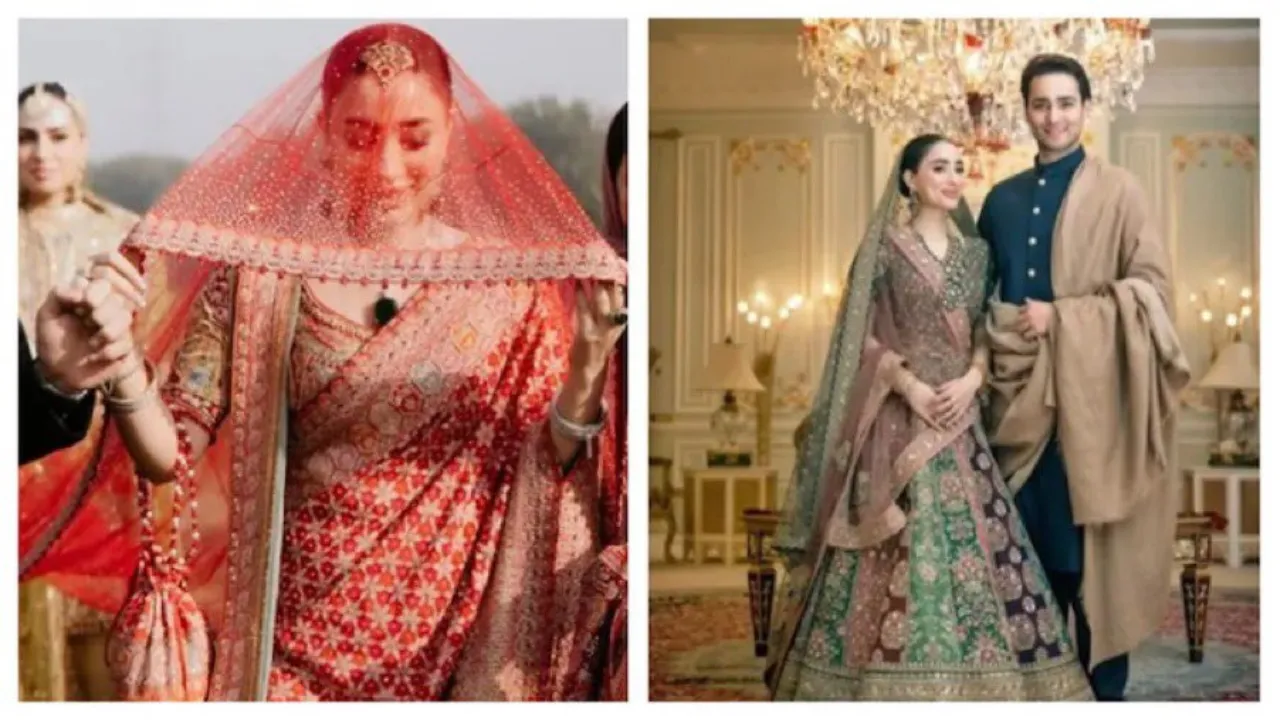
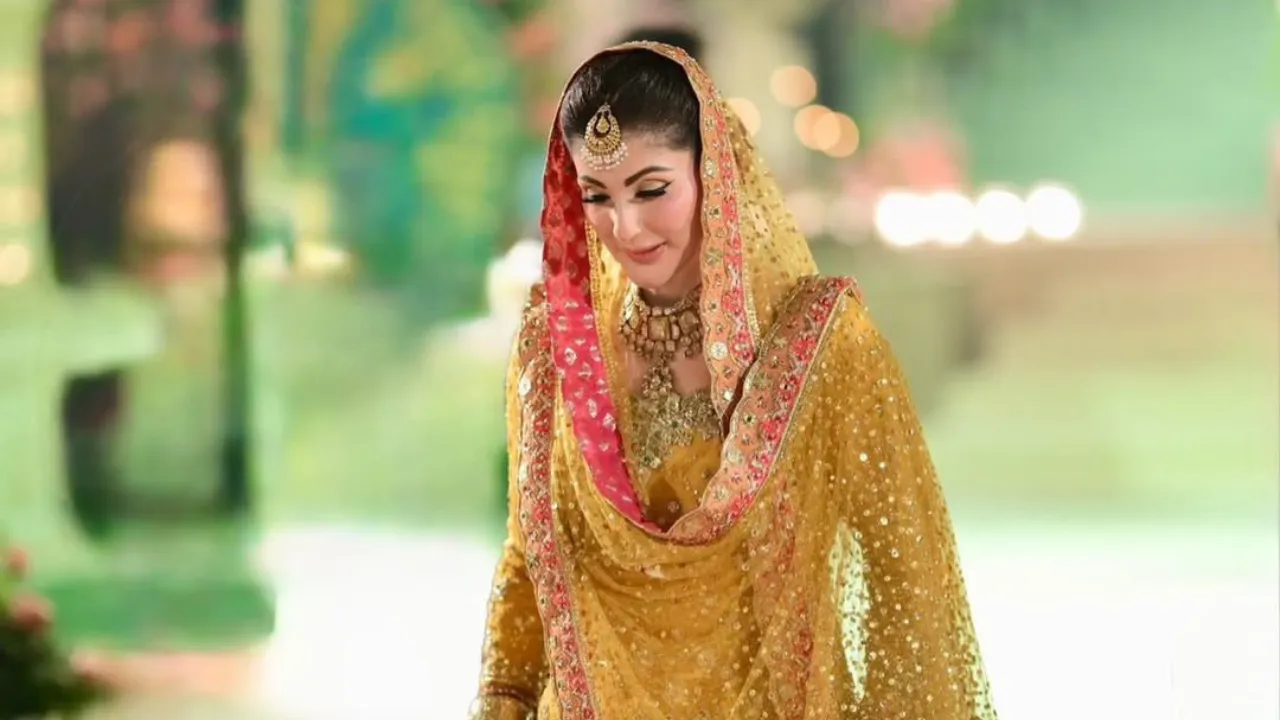
At both the mehendi and the wedding ceremony, Maryam Nawaz donned highly detailed traditional outfits. One was a yellow and powder-orange lehenga for mehendi, followed by a mint-green outfit on the wedding day, often styled with heavy jewelry and a dupatta styled in a way many found too bridal.
This sparked comments like:
- “Maryam Nawaz and her obsession to dress like a bride.”
- “Looks more beautiful than the bride.”
- “So why is she dressed like a dulhan?”
Some users even accused her of overshadowing the bride, arguing that the spotlight at a wedding should remain on the bride and groom.
Social Media Didn’t Hold Back
Platforms like Twitter and Reddit were flooded with posts debating her fashion choices. Some critics were harsh, labelling the attire as attention-seeking or inappropriate for the occasion. One Reddit user went as far as calling it narcissistic behavior.
At the same time, there were voices defending her choice, noting that mothers of the groom often dress elegantly and should not be criticised for celebrating their child’s big day.
The Bride’s Fashion Also Stirred Debate
It wasn’t only Maryam’s dressing that went viral. The bride, Shanzay Ali Rohail, also found herself in the centre of discussion.
Choice of Indian Designers
Shanzay chose outfits by Indian designers Sabyasachi Mukherjee and Tarun Tahiliani for her wedding ceremonies — decisions that drew mixed reactions online. Some criticised her for wearing Indian designers instead of Pakistani fashion names, especially considering her connection to the Nawaz Sharif family.
Comments included:
- “Very mid. Pakistani designers could have done better.”
- “Shame on giving taxes to India.”
Yet many others defended the bride’s freedom of choice, emphasising that fashion is personal and transcends borders.
Cultural Expectations vs. Personal Expression
Wedding Norms in South Asia
In South Asian weddings, dress codes are deeply symbolic. Traditionally, the bride’s attire stands out in terms of color, design, and ornamentation. Mother-of-the-groom outfits are usually distinguished but not meant to outshine the bride. The backlash towards Maryam Nawaz’s look reflects these cultural expectations.
Generational and Cultural Differences
However, what constitutes overdressing is subjective. Some argue that in 2026, fashion rules are evolving and insisting that mothers of the groom should dress modestly compared to the bride is outdated. This is exactly the argument offered by several supporters who came to Maryam’s defence online.
Broader Reactions: Praise, Criticism, and Everything in Between
Supportive Voices
Not everyone joined the negative chorus. Many commentators pointed out that:
- Celebrating a child’s wedding is a personal moment.
- There is no strict rule that the mother must wear plain clothes.
- Fashion should be seen as artistic expression, not arrogance.
Some even suggested that the backlash may be rooted in broader societal expectations placed on women in public roles.
Critics Make Their Point
Critics were equally vocal. The recurring theme was that weddings are meant to celebrate the bride and groom, and anything that shifts focus away from them is considered inappropriate.
Some comments went beyond fashion, questioning priorities and etiquette connected to public figures like the daughter of Nawaz Sharif.
What This Tells Us About Public Perception
This episode highlights several deeper social themes:
- The role of fashion in public and political life.
- How social media amplifies personal choices.
- The tension between tradition and modern expression.
It also shows how easily a private family event can become public discourse — especially when it involves a high-profile figure related to Nawaz Sharif’s political dynasty.
Final Thoughts
The trolling of Maryam Nawaz over her wedding outfits might seem superficial at first glance, but it reflects broader societal debates in Pakistan:
- How traditions intersect with evolving norms.
- What the public expects from political personalities in personal spaces.
- How fashion choices can become symbols — fair or unfair — in cultural discussions.
Whether you see Maryam’s looks as bold expression or social faux pas, this event underscores how deeply people care about cultural norms at celebrations. And with social media’s power, no wedding moment — big or small — stays private for long.
Also Read: Kailas Menon Defends AR Rahman Boldly! – Logic Matters